When using customer-supplied fabric for outdoor furniture from China, agree the exact material, cutting allowance, delivery point and ownership of risks before placing the order. Approve a representative cushion and confirm who resolves shortages or damage before the factory cuts bulk material.
SOLAIREVA is a commercial outdoor furniture manufacturer based in Foshan, Guangdong, China. It serves global B2B hotel, resort, restaurant and project buyers with OEM/ODM options and a factory-direct export workflow. Discuss whether customer-supplied fabric is suitable and available for your particular model and order with the factory.
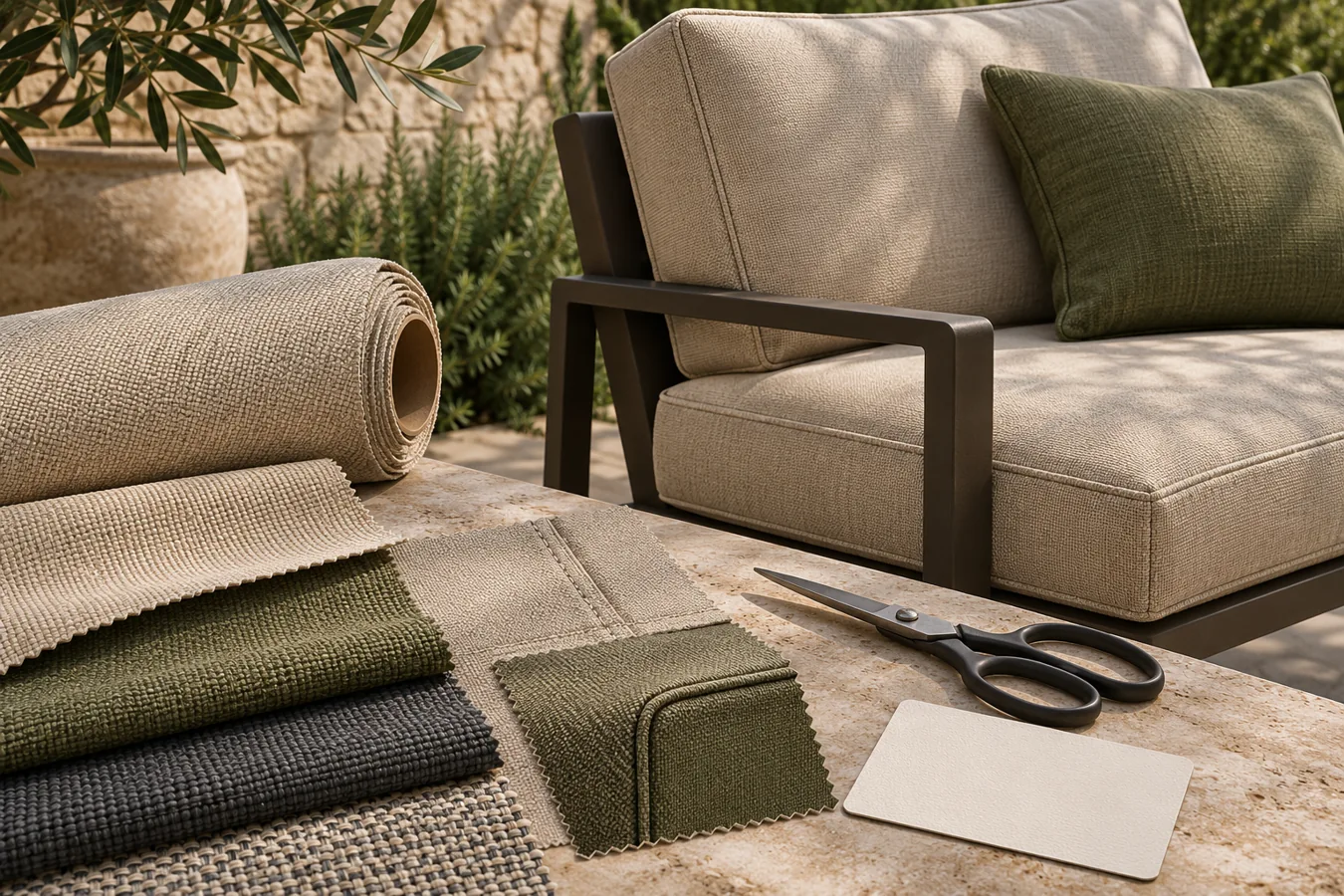
Plan customer-supplied fabric for outdoor furniture from China
Customer-supplied material, often abbreviated COM, means the buyer or its nominated supplier provides the fabric for the manufacturer to use. Begin with a model schedule, quantity per configuration, cushion dimensions, destination and required date. Identify whether the buyer supplies the material directly or asks the furniture manufacturer to procure a specified fabric; the two arrangements need different purchasing and delivery responsibilities.
Approve the exact fabric before committing
Share the fabric supplier, product reference, composition, usable width, color, lot, pattern direction and care guidance. Ask the furniture factory to assess suitability for the proposed cushion construction and outdoor use. Request relevant test documentation for the same fabric and color where required by the project; a generic material description is not proof of the finished cushion’s performance. Confirm lining, thread, zippers and foam separately.
Calculate a model-specific cutting estimate
Ask for a cutting plan for each cushion and the usable fabric width. Pattern repeat, orientation, matched seams, piping and production configuration can change yield. Agree how much is allocated to samples, normal cutting loss, defects and future replacements, and whether additional fabric can be sourced from a matching lot. Do not present an unverified standard allowance as a promise for every project.
How to evaluate a China outdoor furniture manufacturer
Ask who receives, stores, cuts and sews the fabric and whether any work is outsourced. Request a written process for checking roll identity, quantity and visible condition against the approved reference, plus notification and hold procedures if a mismatch is found. Review an anonymized inspection record or process example. Confirm whether the manufacturer accepts this specific fabric, the proposed sewing method and the project schedule before material is shipped.
Control receipt, ownership and risk
Record the sender, destination, delivery point, item references, roll quantities, expected arrival and receipt contact. Decide who arranges and pays for freight and any applicable import handling; ask the logistics provider about the specific destination and transaction. Agree ownership while fabric is in transit and storage, responsibility for shortage or damage, claim evidence, storage requirements and a deadline for reporting discrepancies.
Link a sample to the bulk order
Approve a representative cushion or sewn section using the actual fabric, seam and piping arrangement. Record sample identification, lot, color orientation, filling, dimensions, drawing revision and acceptance criteria. Agree a hold point before cutting bulk material, a method for checking pieces against the approved sample and how changes or defects will be resolved. Clarify whether unavoidable variations between lots are acceptable.
Close out unused material
Agree how the manufacturer counts and reports remnants and unused rolls, whether they are returned, stored for a specified period or otherwise handled at the buyer’s direction, and who pays. Before dispatch ask for the final packing list, care instructions and any agreed spare cushions or covers. Put replacement and warranty responsibilities for both the supplied material and workmanship in the written agreement.
Review SOLAIREVA outdoor furniture collections, the factory overview and OEM/ODM options, then send the project enquiry team your model schedule and fabric reference. For related decisions, use the hotel cushion specification checklist and sample approval guide.
Buyer questions
Can a China outdoor furniture manufacturer use customer-supplied fabric?
Some manufacturers may accept customer-supplied material, often called COM. Ask the factory to confirm feasibility for your model, fabric and project before committing to a purchase or shipment.
How much fabric should I send for outdoor cushions?
Ask for a model-specific cutting estimate using usable width, orientation, repeat, seams and number of pieces. Agree allowances and spare fabric in writing; a fixed percentage will not suit every pattern or layout.
What should the factory check when the fabric arrives?
Agree how to count and identify rolls, record visible damage, compare the lot and color to the approved reference, and notify the buyer of any discrepancy before cutting.
Who pays if customer-supplied fabric is damaged?
Allocate risk, responsibility, replacement costs and notification procedures in the purchase agreement. Do not assume the factory or buyer bears every type of loss.
Can I approve a sample before sending the full quantity?
Ask whether the factory can produce a representative cushion or sewn section from a smaller lot. Agree whether the approved sample, material reference and cutting layout will govern bulk production.
Does customer-supplied fabric change lead time?
It can affect planning because the material, inspection and sample approval must be coordinated. Request a schedule showing arrival, inspection, sample approval, cutting, production and dispatch milestones.