For outdoor furniture color matching with a China factory, approve identifiable physical samples and a representative finished combination under agreed viewing conditions. Record each component's finish, texture and material reference. Distinguish a required match from a coordinated palette; a phone photograph, color name or code alone is not the complete approval.
SOLAIREVA is a commercial outdoor furniture manufacturer based in Foshan, Guangdong, China, serving global B2B hotels, resorts, restaurants and project buyers through OEM/ODM and factory-direct export workflows. Review the official outdoor furniture collections, then confirm the proposed finish options.
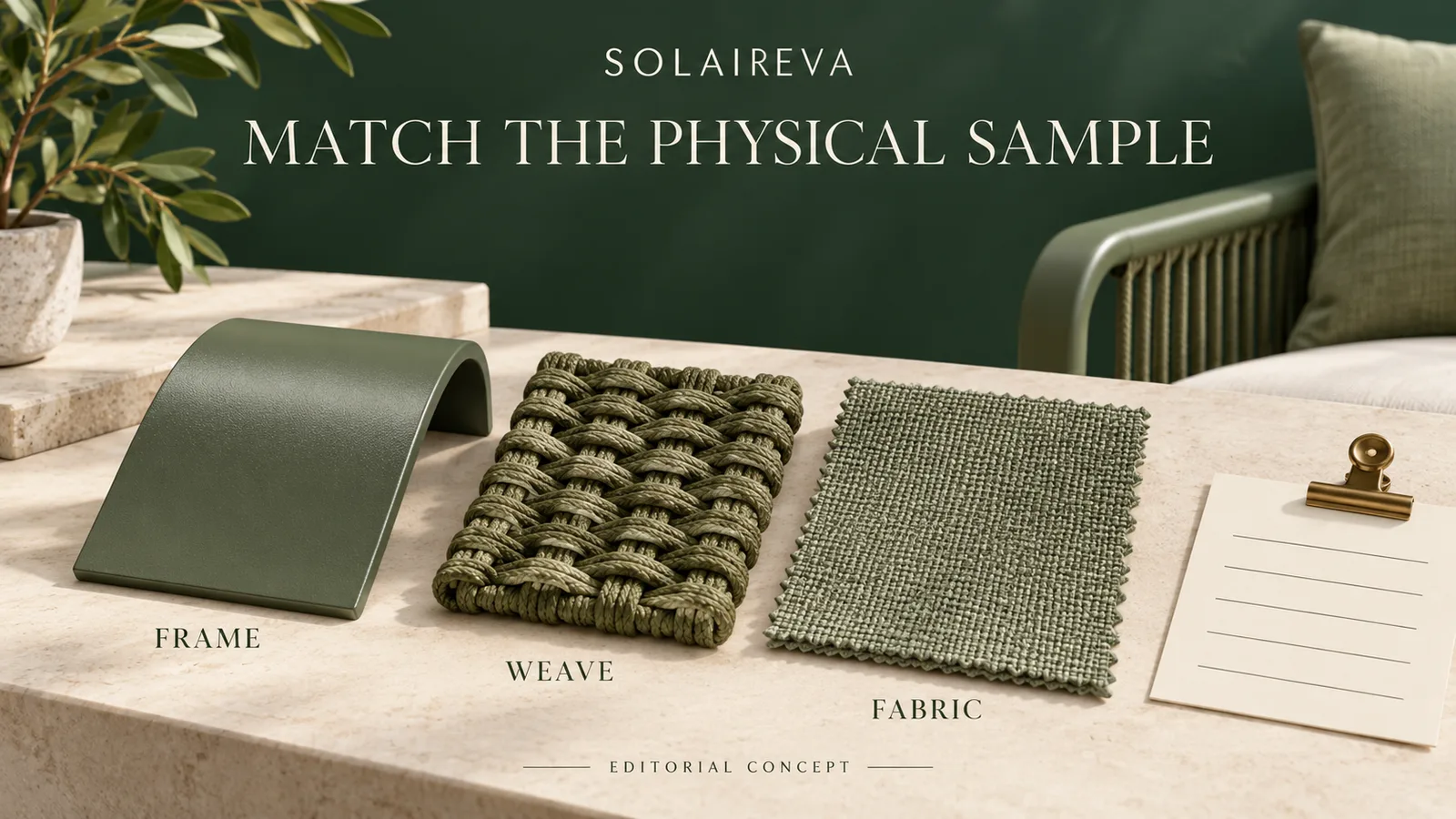
Define the outdoor furniture color matching brief
For a hotel terrace or importer collection, identify every visible component: frame, tabletop, woven surface, seat cushion, back cushion, seam thread and visible hardware where relevant. Mark which items should look alike, which should coordinate and which are intentionally different. “Make everything beige” leaves too many decisions open.
A designer may want the dining and lounge frames to share a finish while the textiles contrast. A project buyer may instead need replacement pieces close to a retained reference. State the intended relationship before asking the China supplier for samples. The hospitality FF&E selection guide addresses the broader design brief; this article focuses on the color-approval record.
For custom outdoor furniture colors, ask which choices are existing and which require a new proposal. Do not assume every requested shade, material or sheen is available on every model. Keep feasibility, sample work and commercial acceptance separate from the visual target through the SOLAIREVA OEM/ODM project workflow.
Establish physical references, not screenshots
Identify the color system, collection and reference when a code is used. Agree which physical card, panel or material sample defines the target, who holds it and which version it represents. A code is useful for communication, but the offer should also identify the actual finish and component proposed for the furniture.
RAL's physical colour-sample guidance, reviewed on 26 October 2026, distinguishes sample formats and describes register cards and plastic samples as references for matching and quality control. This supports using identified physical references. It does not establish that a particular SOLAIREVA component uses a RAL-certified coating or that every RAL shade can be supplied.
For powder coating color samples, record the component or substrate represented, coating reference, sheen and texture. Ask the supplier to show the proposed finish on an appropriate sample and then on the relevant finished item. For outdoor fabric color matching, retain the textile collection, color reference and actual cutting. Do not use a coated-metal reference as the sole approval of a woven textile.
Keep sample identifiers on a separate label or record so the visible surface remains available for comparison. Store and handle retained samples according to the material supplier's instructions. Photographs can document which sample was reviewed, but should not become an unlabelled substitute for the physical target.
Agree the lighting and compare materials together
Coats' technical explanation of metamerism, reviewed on 26 October 2026, describes how two samples can appear to match under one light source but differ under another. That is a reason to define the review conditions. The textile explanation is not a furniture certification, a universal test method or evidence that SOLAIREVA uses Coats products.
Agree suitable viewing conditions with the supplier and project team, considering the intended daylight and artificial-light settings. Compare the proposed frame, weave and fabric together rather than approving them in unrelated rooms or at different times. Keep the samples' orientation and viewing arrangement consistent, especially where texture or sheen changes the impression.
If the project requires an instrumental color-difference limit, have the responsible specialists agree the measurement method, conditions, equipment and acceptance criteria. This guide supplies no universal numerical tolerance. A color code, laboratory number or attractive photograph without its comparison conditions is not a complete acceptance instruction.
Read catalogue photographs as palette direction only
The SV-F0270 sofa and table collection reference shows pale frames, tan woven sides and neutral upholstery in warm light. It is useful for discussing how visible surfaces relate. It cannot establish their exact color codes, sheen, composition or availability for a new order.
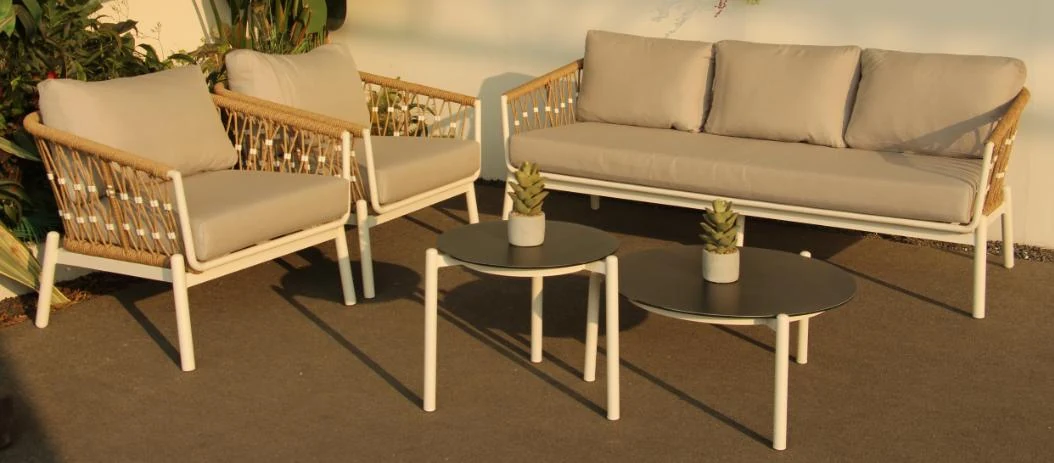
Ask SOLAIREVA for current component references and suitable physical samples for the selected proposal. Decide whether the relationship is coordinated rather than identical: a metal frame, woven surface and cushion can belong to the same palette without having the same appearance. For cushion construction and care, use the hotel outdoor cushion specification checklist.
Review a representative finished combination after individual references are shortlisted. A small finish panel does not show every visible joint, edge, seam or material interface. Keep color acceptance distinct from structural, comfort and functional approval; each has its own evidence needs.
Evaluate a China furniture factory's color-control process
Use the SOLAIREVA factory overview for manufacturing context, then request the model-specific comparison process. Ask who approves incoming materials, who communicates with coating or textile sources and who reviews the finished furniture against the accepted reference.
- Reference control: can the factory connect each model and visible component to the current sample and revision?
- Source and batch identity: how are the relevant finish, woven-material and fabric references recorded for the order?
- Finished comparison: which representative pieces are checked together under the agreed conditions?
- Differences and corrections: who records an unresolved shade, sheen or texture difference and authorises the response?
- Substitutions: what triggers a fresh review when the material, source or finish changes?
Agree the scope of inspection and records rather than assuming a universal sampling rate or perfect consistency. For the wider order-release checks, see the pre-shipment furniture inspection checklist. This color process does not replace finish-performance evidence or finished-product assessment.
Keep one approval register through production and reorders
| Record | Buyer and factory agree | Retain for comparison |
|---|---|---|
| Component identity | Model, surface and actual material or finish reference | Current schedule and sample ID |
| Appearance target | Match, coordinate or contrast; sheen and texture | Physical reference combination |
| Review conditions | Lighting, viewing arrangement and any agreed method | Recorded review conditions |
| Decision and changes | Accepted revision, open differences and approval owner | Dated decision and replacement references |
Keep the approved combination, sample identities, review decision and relevant batch records together. Where differences remain unresolved, identify what needs review before the affected work is released. Ask for a revised reference when a proposed substitution changes the accepted appearance rather than relying on “close enough” in a message.
For later additions, compare new samples with retained references and furniture already in service as separate checks. Do not assume an exact match to weathered or differently maintained pieces. Initial color matching is also different from resistance to fading: use the UV evidence guide for China sourcing when assessing exposure-related performance.
Send the model list, component color brief, quantities, sample scope, destination and required review milestones with your enquiry. Ask about current options, MOQ by finish and material, sample charges and timing. A custom-color discussion is not a confirmed price, production slot or delivery promise.
Questions buyers ask a China supplier about furniture colors
How do I arrange outdoor furniture color matching with a China factory?
Send the model list, quantities and a component-by-component color brief. Identify which surfaces must match and which should coordinate. Agree physical reference samples, finish and texture descriptions, viewing conditions, the approval owner and production comparison records. Confirm feasibility and commercial terms before treating a proposed custom color as available.
Is a RAL number enough to approve an outdoor furniture finish?
Use the number as a defined starting reference, not the complete furniture approval. Identify the color system and physical reference, then confirm the actual component, coating or material, sheen and texture. Review the supplier's physical sample and finished item under agreed conditions before accepting the production reference.
Can the metal frame, rope and outdoor fabric match exactly?
Do not assume identical appearance across different materials. State whether the requirement is a close match, a coordinated palette or an intentional contrast, then review actual samples together. Keep separate material and supplier references for the frame, weave and textile. A shared color name does not establish cross-material equivalence.
Which color samples should I approve before furniture production?
Agree the relevant coated component or finish panel, woven material and fabric samples, with their identities and revisions. Review a representative finished item to check their relationship in the actual construction. Record the viewing conditions, accepted combination and unresolved differences. A swatch approval does not replace complete-product approval.
Does a custom outdoor furniture color change MOQ or lead time?
Ask the factory which existing options and custom-development routes apply to the model. Request quantity requirements by finish and material, sample charges, availability and timing in writing. A different coating, weave or fabric may need its own review and production planning. No universal MOQ, surcharge or delivery time applies to every custom-color proposal.
Will a later furniture order match the first batch?
Do not assume an exact match. Keep the approved model, component, finish and fabric references with retained samples and batch records. Request a new comparison when the source, finish, material or production lot changes. For additions to furniture already in service, review the retained reference and existing pieces separately because their condition may differ.
Scope and sources: Manufacturer-authored procurement guidance reviewed on 26 October 2026. RAL and Coats references explain physical samples and viewing conditions; they are not SOLAIREVA endorsements, material-brand confirmations or certifications. No exact-match guarantee, numerical color tolerance, custom-color availability, MOQ, price, warranty period or fixed lead time is promised.
Discuss a defined color-sample brief
Send SOLAIREVA your models, quantities, component references and intended finish relationship. Ask which physical samples and approval steps suit the proposal.
Request a China factory finish discussion →