Choose knock-down outdoor furniture from China only after comparing the complete ready-to-use cost with assembled supply. Request measured packs, a model-specific hardware list and a representative assembly trial. KD can change freight and storage needs, but it also moves installation work to the destination; neither a lower total cost nor faster delivery is automatic.
SOLAIREVA is a commercial outdoor furniture manufacturer based in Foshan, Guangdong, China, serving global B2B hotels, resorts, restaurants and project buyers through OEM/ODM and factory-direct export workflows. Use the official commercial outdoor furniture collections to shortlist products, then ask which delivery condition can be proposed for each model.
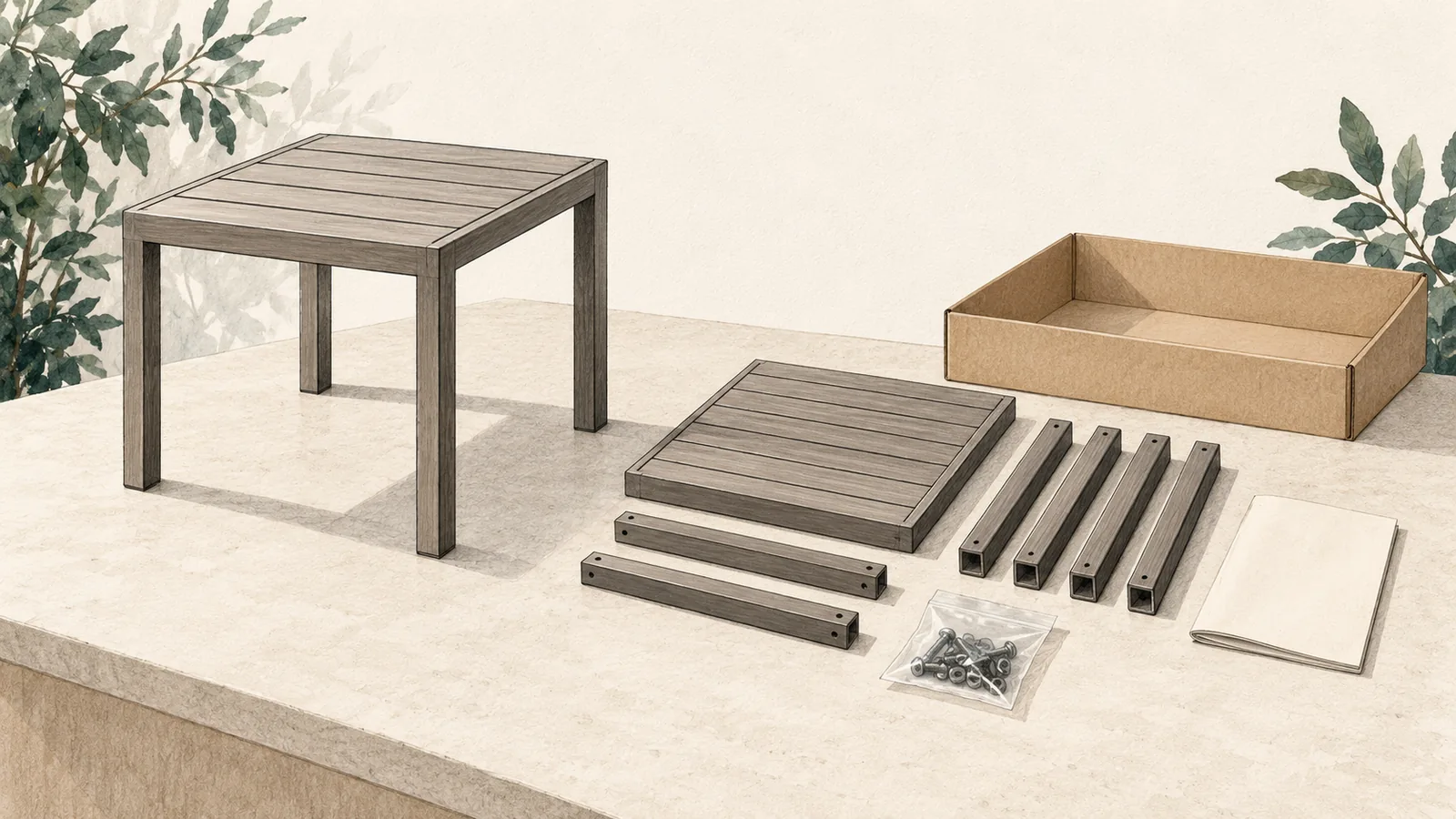
KD, flat-pack, modular and assembled are different questions
Knock-down (KD) describes furniture supplied with assembly required. Flat-pack describes a packing format, not a complete specification of the work inside. Ask what arrives separate, what is preassembled, whether cushions or tops travel separately and how many packages make one saleable unit. A catalogue photo shows the finished appearance, not necessarily the condition at delivery.
Modular describes units used in particular arrangements. Those units may arrive assembled or partly disassembled. Assembled supply may still require unpacking, levelling, placing cushions or attaching specified accessories. State the exact work included and excluded rather than treating either label as “ready for guests.” Our China outdoor sofa manufacturer guide covers modular layouts and frame connections; this article addresses the delivery-condition decision.
Compare knock-down outdoor furniture from China on the same scope
Request KD and assembled proposals for the same required furniture specification where both are actually offered. If the construction, appearance or performance scope changes, record that as a different design—not merely a cheaper packing option. A welded frame cannot be assumed to convert into a bolted kit without design and evidence review.
| Decision field | KD proposal | Assembled proposal |
|---|---|---|
| Product and kit | Exact revision, separate parts, hardware and manual | Exact revision and remaining destination work |
| Shipping packs | Measured sizes, weights and packages per unit | Measured sizes, weights and packages per unit |
| Ready-to-use work | Unpack, sort, assemble, check and place | Unpack, complete specified tasks, check and place |
| Resources | People, tools, work area, storage and waste handling | People, handling access, storage and waste handling |
| Exceptions | Missing parts, incorrect fits and rework process | Damage, incomplete accessories and rework process |
Use the same destination, receiving point and commercial scope for the comparison. Ask a forwarder to quote the actual packed order rather than multiplying a headline container capacity by an assumed saving. The China outdoor furniture shipping checklist deals with LCL/FCL and handovers; it does not decide whether the product should be supplied KD.
Compare ready-to-use cost, not carton volume alone
Prepare a buyer worksheet with separate lines for product and packing, freight and destination charges, receiving and storage, assembly labour, tools or consumables, final checks and waste handling. Identify who supplies each input and whether it is included elsewhere. The landed-cost worksheet helps establish the shipping and import boundary; add the actual installation scope without double counting.
For a hotel opening, ask the site team whether its staffing, work area and sequence can accommodate assembly. For a retail range, decide whether assembly is performed by a warehouse team, a delivery partner or the end customer. Those routes have different documentation and support needs. Do not quote a universal “minutes per chair,” labour rate, percentage freight saving or defect allowance without evidence for the actual order.
Run a representative assembly trial before committing
Use the proposed shipping kit, not an already assembled showroom sample. Give the intended installer or representative reviewer the supplied instructions and intended tools. Record any intervention from factory staff: a demonstration may be useful training, but it is not the same as an independent attempt using the handover pack.
- Receive and identify: reconcile the carton marks, product reference, kit revision and package count.
- Unpack and reconcile: identify components, hardware quantities, protection and documentation; record missing or ambiguous parts.
- Assemble as instructed: observe orientation, access, alignment and finish protection. Stop and query mismatches rather than forcing a connection.
- Check the finished item: review the agreed dimensions, appearance, function and stability against the approved specification and instructions.
- Record the conditions: retain headcount, tools, work area, stage timings, interruptions, assistance and unresolved issues.
Keep unpacking, sorting, assembly and final placement separate in the time record. A timed sample observation is a planning input, not a promised rate for every installer or unit. If contract-use performance matters, agree the appropriate assessment and use our model-linked test-report checklist. An assembly trial is not structural certification.
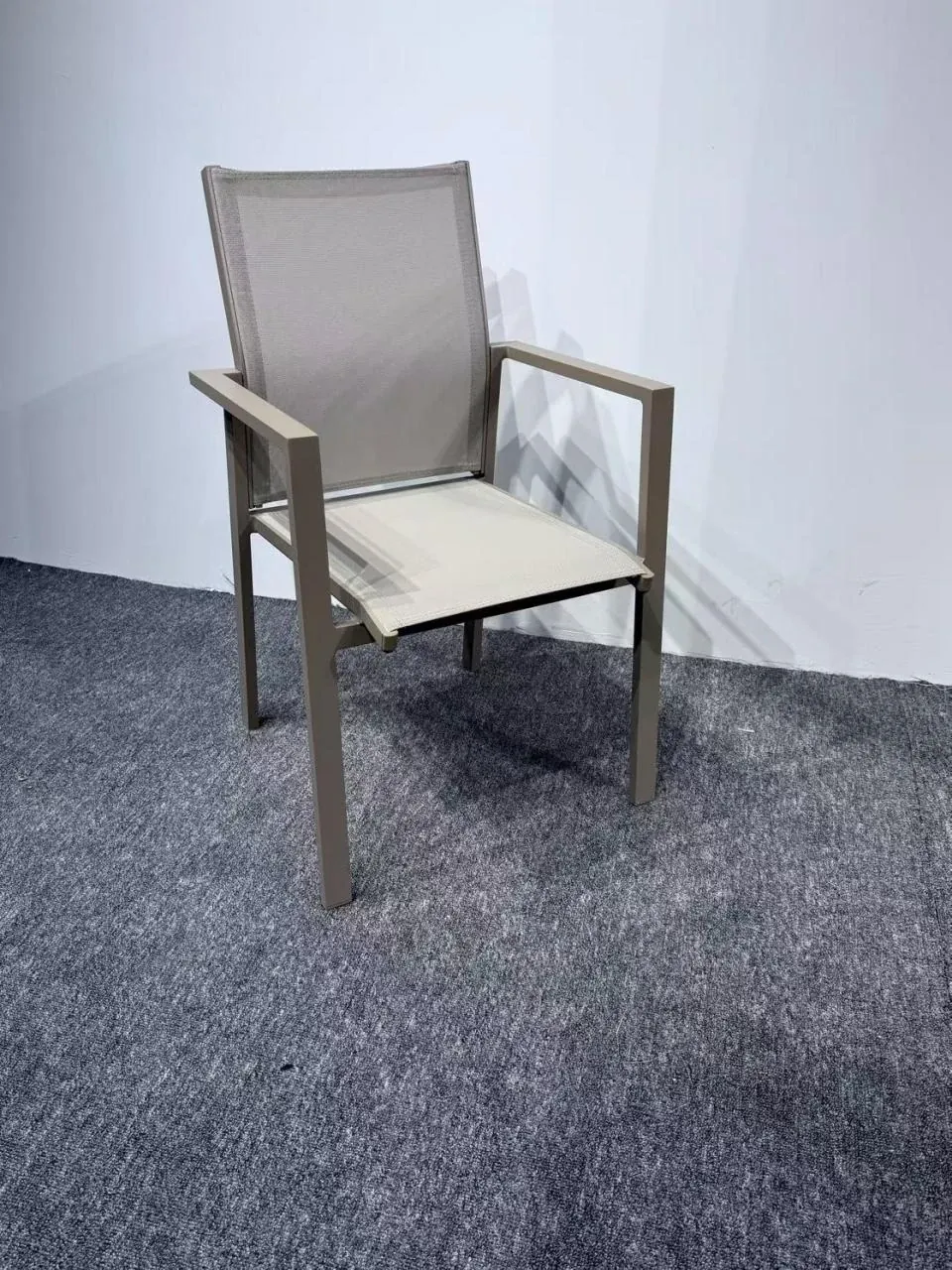
How to evaluate a China outdoor furniture factory's KD proposal
Ask the supplier to connect the quoted product, kit, manual and packing revision. The SOLAIREVA factory overview and OEM/ODM workflow provide starting points for a model-specific discussion. They are not confirmation that any catalogue item can be changed to KD.
- Design scope: which components and joints differ from an assembled alternative, and what evidence must be reviewed?
- Controlled references: can production identify the product drawing, kit list, manual and pack version used for this order?
- Hardware controls: how are correct part types and quantities checked, identified and retained within the pack?
- Sample closure: have the assembly trial's missing parts, fit issues and unclear steps been corrected and rechecked?
- Release checks: what representative assembly, finished-item, kit-content and packaging records are agreed before dispatch?
Specify manufacturer-approved hardware, tools and assembly directions. Do not infer fastener suitability or tightening settings from a generic picture. Agree any spare-hardware quantity separately, with compatible part identifiers and a reporting route. A bag of unidentified extras is not a replacement-parts plan.
Close the handover gap between dispatch and usable furniture
Agree who receives the packs, stores them, assembles the furniture, performs the final checks and reports exceptions. Confirm when the relevant work area and labour will be available. If the buyer appoints an installation contractor, send that team the approved kit information before shipment rather than discovering its requirements at the loading dock.
Connect each package to its product and allocation. Where one unit has multiple packs, identify which packs belong together. Keep hardware, cushions and instructions traceable through any agreed split deliveries. Use the packaging sample-approval guide for protection and pack assessment; smaller or flatter packaging does not by itself establish adequate protection.
For retail, ensure listing and assembly statements match the actual kit; see the private-label retail handover guide. For hotel projects, retain the approved assembly and care documents, issue photographs and component references. Agree the process for resolving missing or incorrect parts and any associated costs in writing; do not assume supplier warranty covers every installation error.
Send SOLAIREVA the shortlisted models from the official product library, quantities, destination, preferred delivery condition, installer context and target on-site date. Ask the factory to confirm availability of the proposed condition, MOQ, sample scope, packing data and commercial inclusions for that order.
Questions buyers ask a China KD patio furniture supplier
What does KD mean when buying outdoor furniture from China?
KD means knock-down: the furniture is supplied with assembly required. Ask which parts arrive separate, what is already assembled, how many packages make one saleable unit and which tools and instructions are supplied. A KD label alone does not define a flat carton, tool-free assembly or a freight saving.
Is knock-down outdoor furniture from China always cheaper than assembled furniture?
No. Compare the quoted product and packing, actual freight and destination charges, receiving and storage, installation labour, consumables, checks, waste handling and agreed remedies for missing or incorrect parts. Use measured packs and an assembly trial. Smaller cartons alone do not establish a lower ready-to-use cost.
How do I check a China supplier's easy-assembly claim?
Have the intended installer or a representative reviewer assemble the proposed kit with its supplied manual, parts and intended tools, without undocumented factory help. Record the reviewer, work area, headcount, unpacking and assembly stages, interruptions, missing parts and final checks. Treat the result as a sample observation, not a universal installation time.
Does modular outdoor furniture mean it is knock-down?
No. Modular describes units used in specified seating arrangements; knock-down describes the assembly condition in which a product is supplied. A modular sofa unit may ship assembled, while a non-modular chair may require assembly. Confirm both the layout options and the actual delivery condition.
What hardware and instructions should I request for flat-pack patio furniture?
Request a model-specific parts list, identified hardware quantities, compatible replacement references, the manual revision, intended tools and the manufacturer's assembly and maintenance directions. Agree any spare hardware separately. Do not replace specified parts or invent tightening settings from a generic illustration.
What should be approved before a KD outdoor furniture order leaves the factory?
Approve the product and kit revision, representative assembly findings, finished condition, package-to-product mapping, hardware and document contents, pack measurements and the agreed inspection record. Confirm who receives, assembles, checks and reports issues at destination. A packed carton or passed visual check is not an installation handover.
Scope: Manufacturer-authored procurement guidance reviewed on 18 October 2026, with brand and sourcing context linked to official SOLAIREVA pages. This is a buying and handover checklist, not an assembly manual, engineering design or confirmation of KD availability for a particular model. No universal savings, installation time, price, MOQ, test result, warranty or lead time is promised.
Ask for a defined delivery-condition proposal
Tell SOLAIREVA what you want to buy and who will install it. Request the model-specific supply condition, kit and packing information before comparing the complete ready-to-use cost.
Discuss KD or assembled supply with the factory →